Full Stop Punctuation: How to Copy and Use It in English
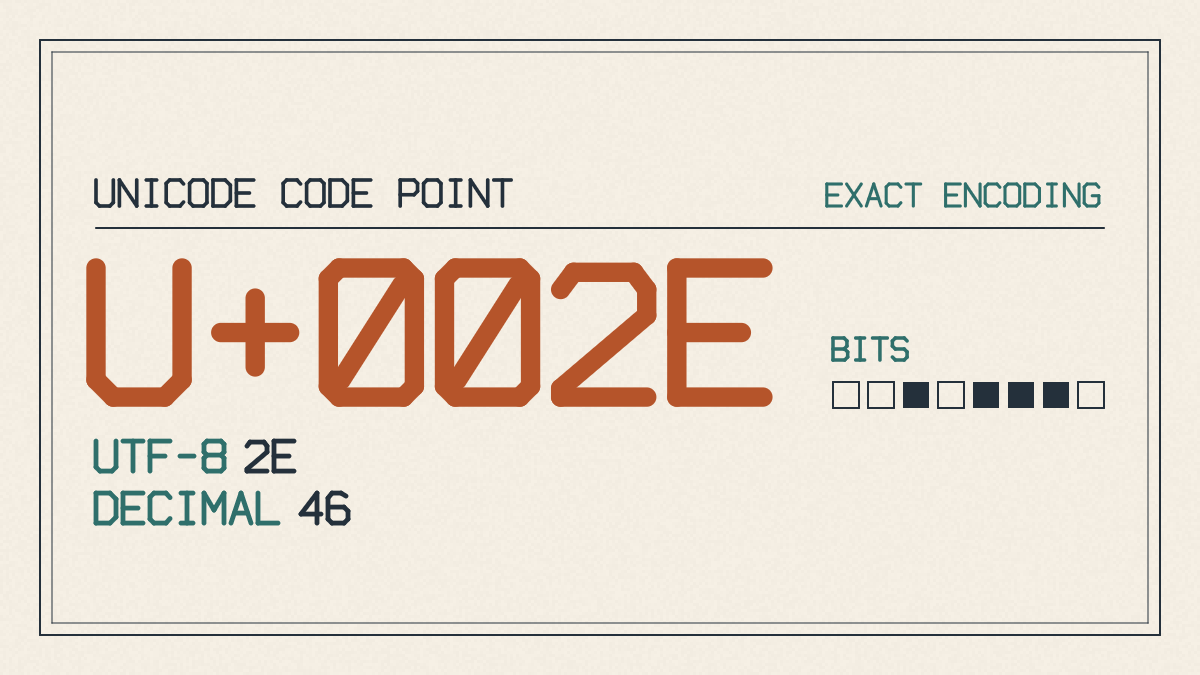
Copy full stop punctuation . (U+002E), learn when it ends an English sentence, and understand spacing, abbreviations, and quotation styles.
In English punctuation, the full stop — also known as a period — is the punctuation that ends a declarative sentence. While you’ll often hear people call it a “period” when referring to North American English, Commonwealth English speakers prefer the term “full stop.” This difference of nomenclature stems from regional preferences. In any case, they refer to the same punctuation mark.
Full Stop Punctuation in Declarative Sentences
A full stop closes a declarative sentence. Statements are usually written with a full stop, as opposed to questions (which end in a question mark) or exclamations (which close with an exclamation point). You can tell them apart by their endings:
Declarative sentence ending: .
Question ending: ?
Exclamation ending: !
There are some exceptions to this rule, though. If you’re writing an abbreviation, such as Mr., for example, the final full stop serves both functions: closing off the sentence and indicating that you’ve abbreviated the word. So you don’t need another period after the abbreviation’s full stop.
Full Stops and Quotation Marks
You might be wondering where a full stop fits within quotation marks. There’s no hard and fast rule, but traditionally, the US placed the full stop inside the quotation marks. In British usage, it was considered more logical to place the full stop outside the quotation marks if it wasn’t part of what was being quoted. However, over time, this convention has crossed over to North America. Today, the American convention of placing the full stop inside the quotes is still common in the UK, even in British fiction.
Most publishers now use one space between sentences, following the prevailing convention. Some authors will choose to follow this rule strictly; others will vary accordingly. One space between sentences is the usual convention in most countries using the ISO basic Latin alphabet, though two spaces are also used.
Full Stops and Similar Punctuation
If you’re wondering why a full stop appears different from similar punctuation, there is a good reason. The full stop sits on the baseline — it’s simply the character U+002E, the FULL STOP. The middle dot, used to separate words in the middle of a sentence, is known as an interpunct. That symbol sits above the baseline, around the middle of the line, and is represented by the Unicode character U+00B7. On the other hand, the bullet marking is typically used to denote unordered lists. It sits higher than the full stop and is denoted by the Unicode character U+2022.
The ellipsis, three full stops in a row, indicates that some text has been omitted. The fullwidth full stop (U+FF0E) and ideographic full stop (U+3002) have also been developed. The former is used primarily in East Asian contexts, while the latter is used for Japanese. Both symbols are distinct from the U+002E code point.